




Ravenna · 6th century
The Basilica of San Vitale and the Mausoleum of Galla Placidia preserve the most extraordinary mosaics in the West. Gold and lapis lazuli tesserae that still burn, fifteen centuries later.

Pineider · Limited Edition
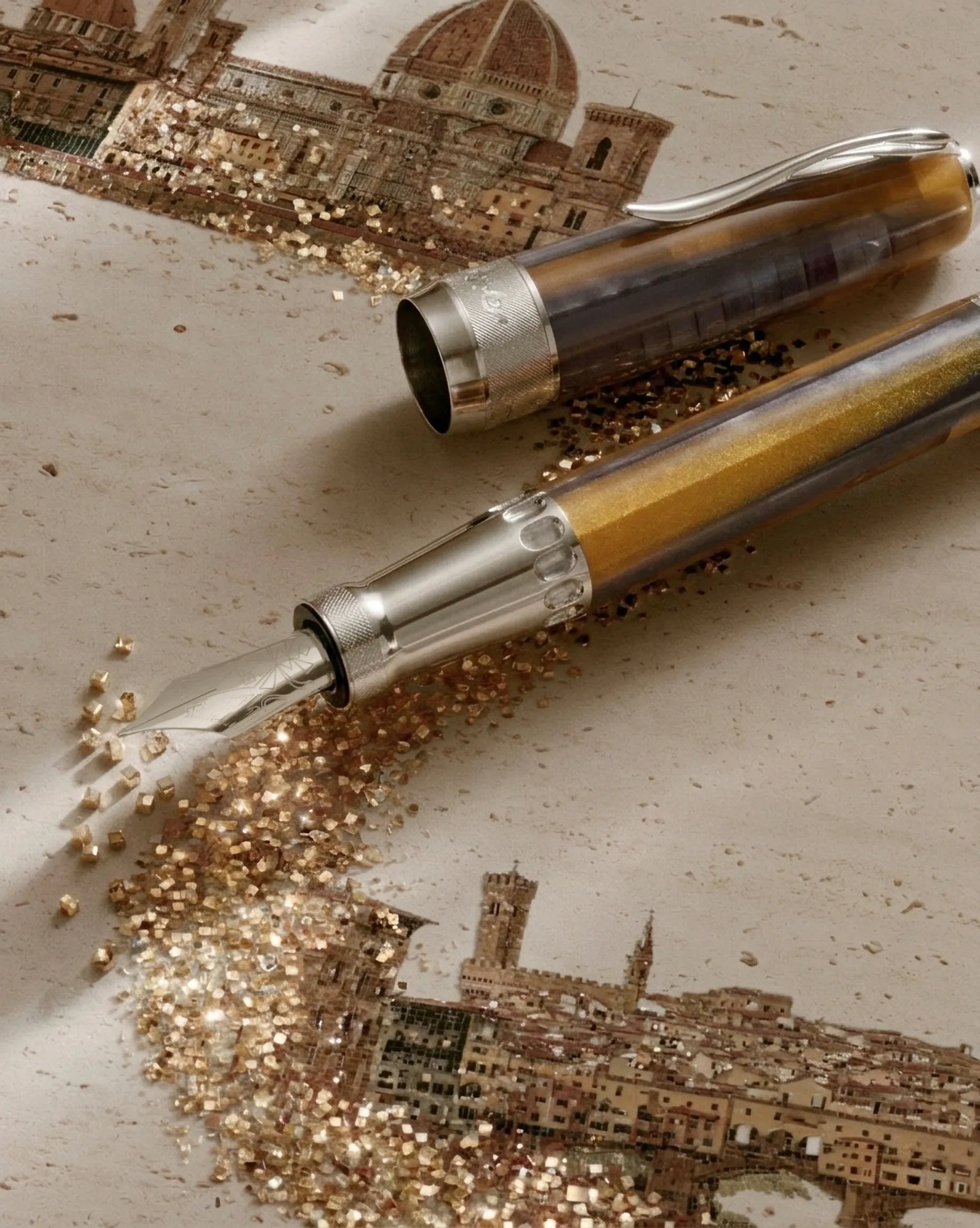
A mosaic of rare resins, a tribute to the golden age of Byzantium.
188 numbered pieces for those who write history.

Byzantium · Pineider 1774
The inspiration
There is a moment in the Basilica of San Vitale in Ravenna when the morning light strikes the golden tesserae of the vault and the entire dome seems to catch fire. It is the 6th century still speaking — the gold of Byzantium crossing fifteen centuries to reach us, intact and dazzling.
Byzantine mosaics were not mere decoration: they were theology made matter, light made gold, eternity made of thousands of tiny tesserae assembled one by one by patient, masterful hands. In Ravenna, in the Mausoleum of Galla Placidia, the starry sky in lapis lazuli blue still moves visitors. In Venice, in the Basilica of San Marco, the nave mosaics tell sacred stories in a visual language no human tongue could equal.
«Tessera by tessera, patience by patience —
thus a mosaic is born. Thus a Byzantium is born.»
Florence, for its part, has never stopped dialoguing with this tradition. As early as the 15th century, Florentine workshops invented commesso fiorentino: the art of inlaying hard stones — jasper, lapis lazuli, agate, porphyry — to create surfaces of extraordinary pictorial beauty. The Opificio delle Pietre Dure, founded by the Medici in 1588 and still active today, preserves and passes on this tradition.
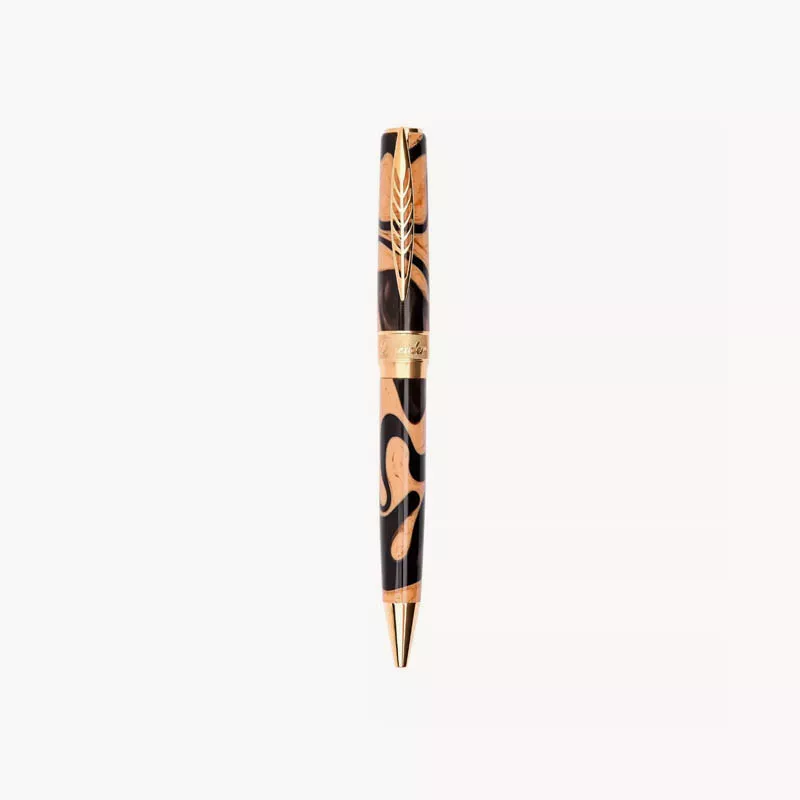
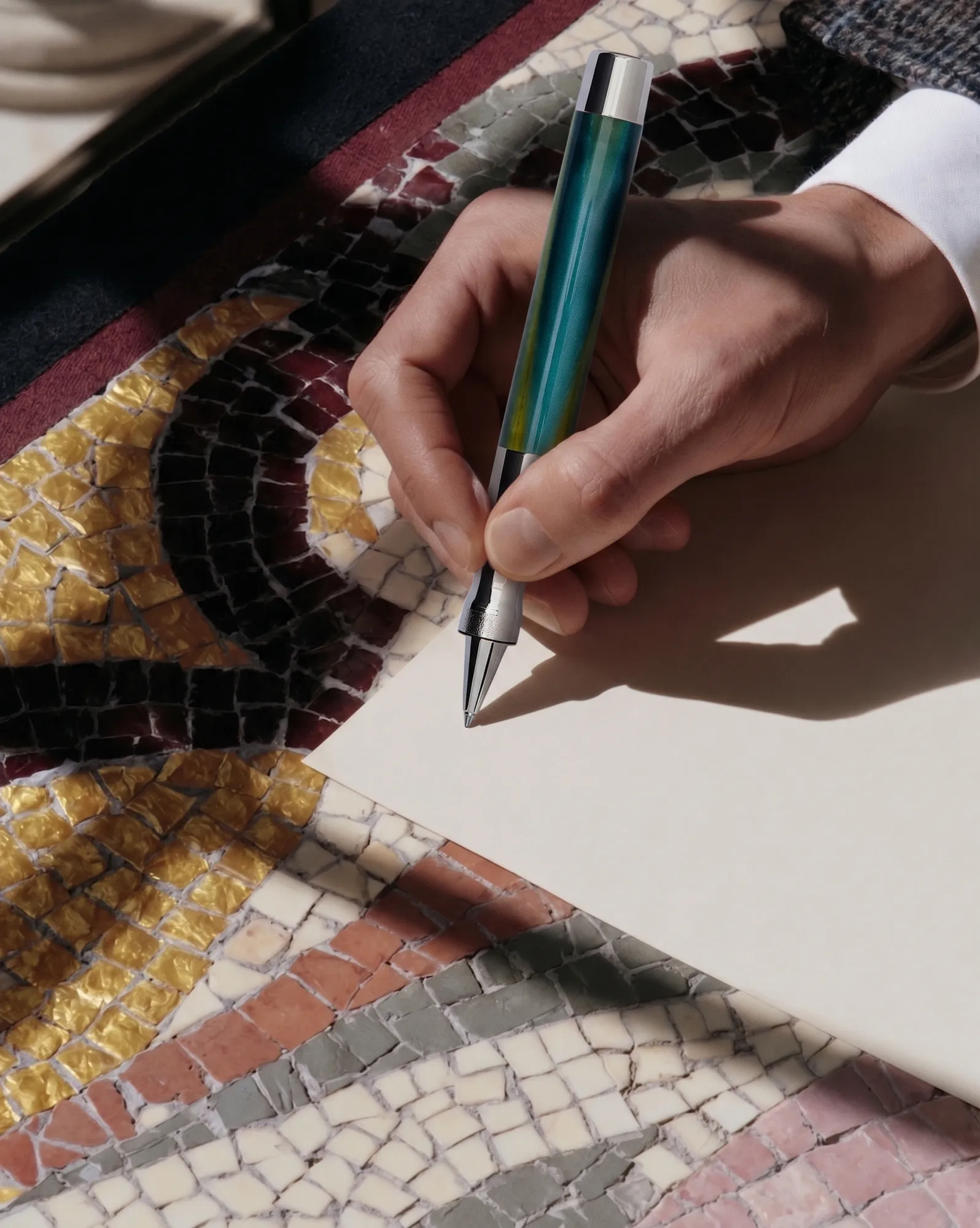
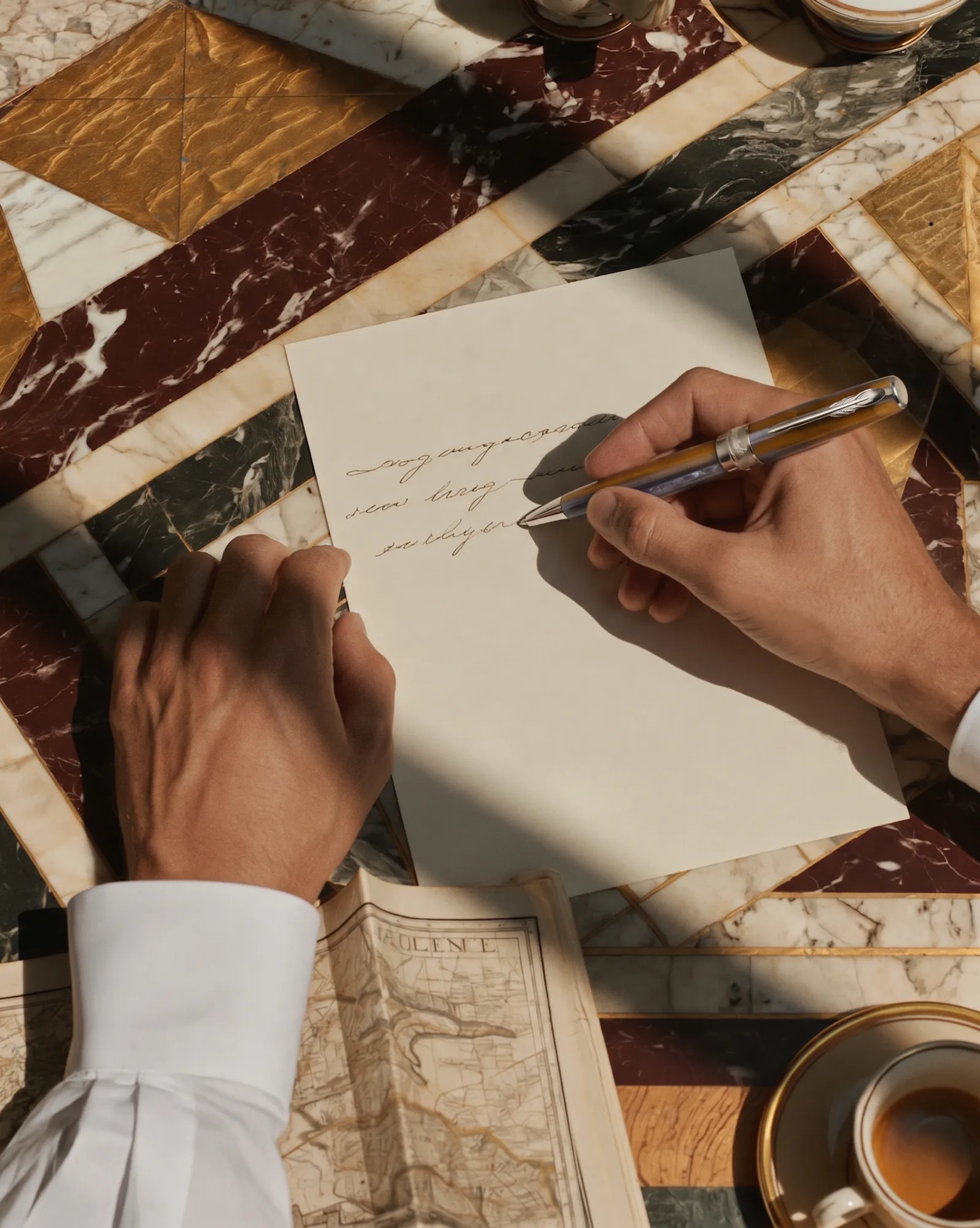
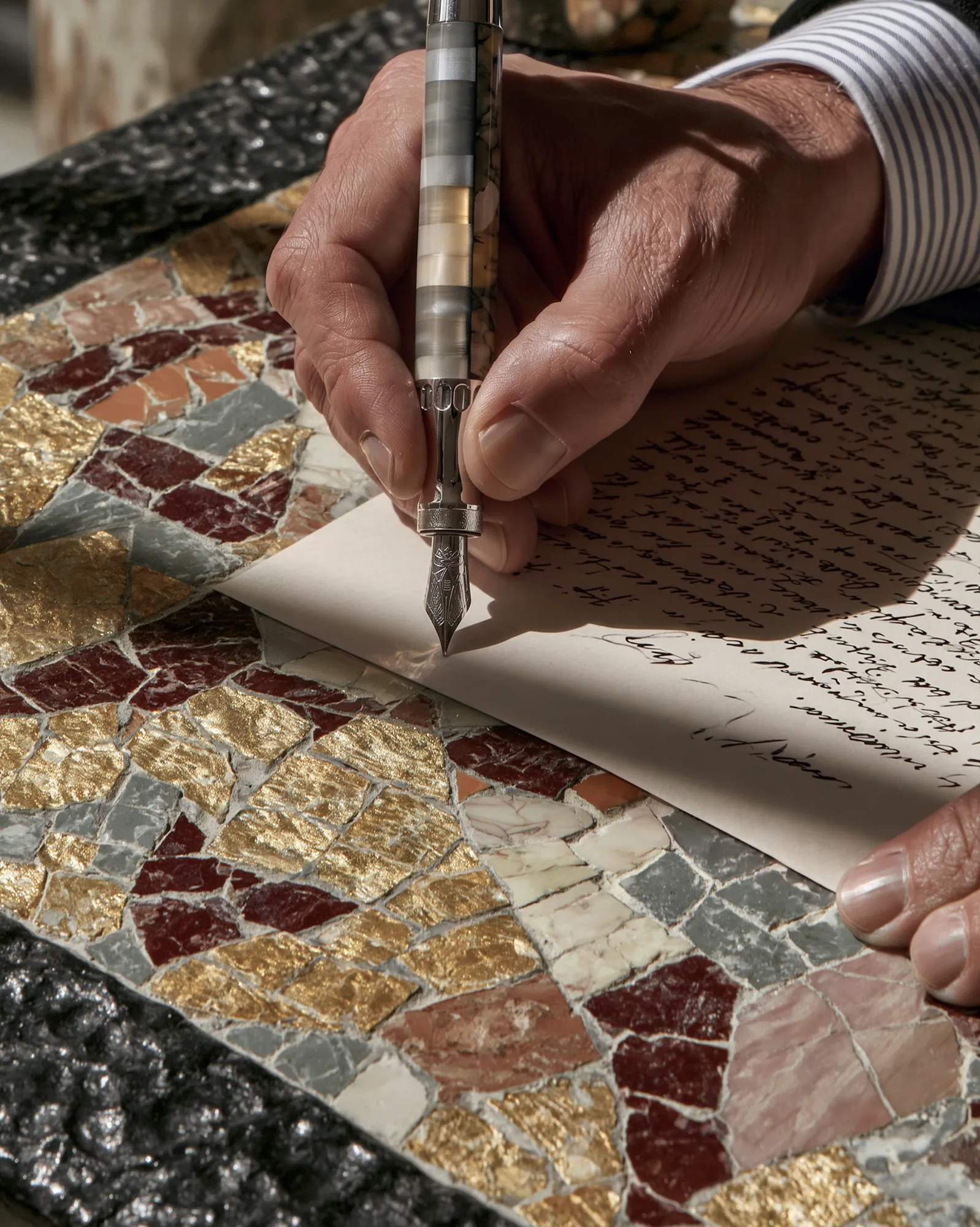
It is from this profound cultural humus that the Byzantium pen by Pineider is born. The body of each pen is built exactly like a mosaic: thin colored resin rods are layered, placed side by side and fused together one by one, in a process requiring hours of artisan work that admits no errors. Every Byzantium is unique in the world.
A tribute to the golden age of Byzantium, to its millennial history, to its orientalism made of gold and light — and to Florence, which has made that heritage its deepest soul.
188 pcs
numbered pieces for each variant
3 col.
color variants: Pearl Stone, Lemon Grass, Gold Stone
3 mod.
fountain pen, roller and ballpoint
3 pts
steel nib: Extra Fine, Fine, Medium
The process
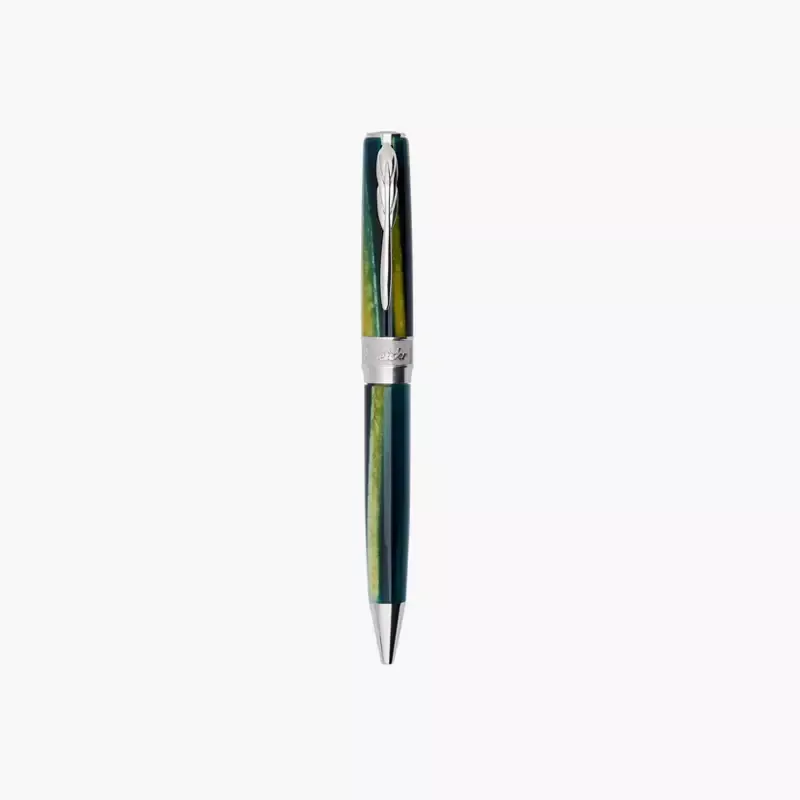
The artisan selects the colored resin rods — three colors chosen to evoke the great Byzantine chromatic schemes: the iridescent white of Pearl Stone, the acid bright green of Lemon Grass, the warm gold of Gold Stone.
The rods are cut, overlapped and hot-fused into a single block — exactly as mosaic tesserae are laid on the lime bed one by one. The block is then turned, polished and buffed until the internal pattern is revealed: every cut is a discovery, every pen a surprise.
No machine can replicate this process. No Byzantium pen is identical to another. As in Ravenna, as at Florence's Opificio delle Pietre Dure — authentic beauty cannot be serialized.
Ravenna · 6th century
The Basilica of San Vitale and the Mausoleum of Galla Placidia preserve the most extraordinary mosaics in the West. Gold and lapis lazuli tesserae that still burn, fifteen centuries later.
Florence · since 1588
The Opificio delle Pietre Dure, commissioned by Ferdinando I de' Medici, has refined for centuries the art of commesso fiorentino — stone painting that is a direct heir of the great ancient mosaic.
Venice · Basilica of San Marco
Over 8,000 square meters of golden mosaics cover naves, domes and apses. One of the largest mosaic surfaces in the world: the East meeting the West in Venice.
The pearly white of polished stone, with its iridescent shades. Like the ivory of Byzantine imperial diptychs or the polished surface of Carrara white marble — a color carrying the purity and weight of centuries.
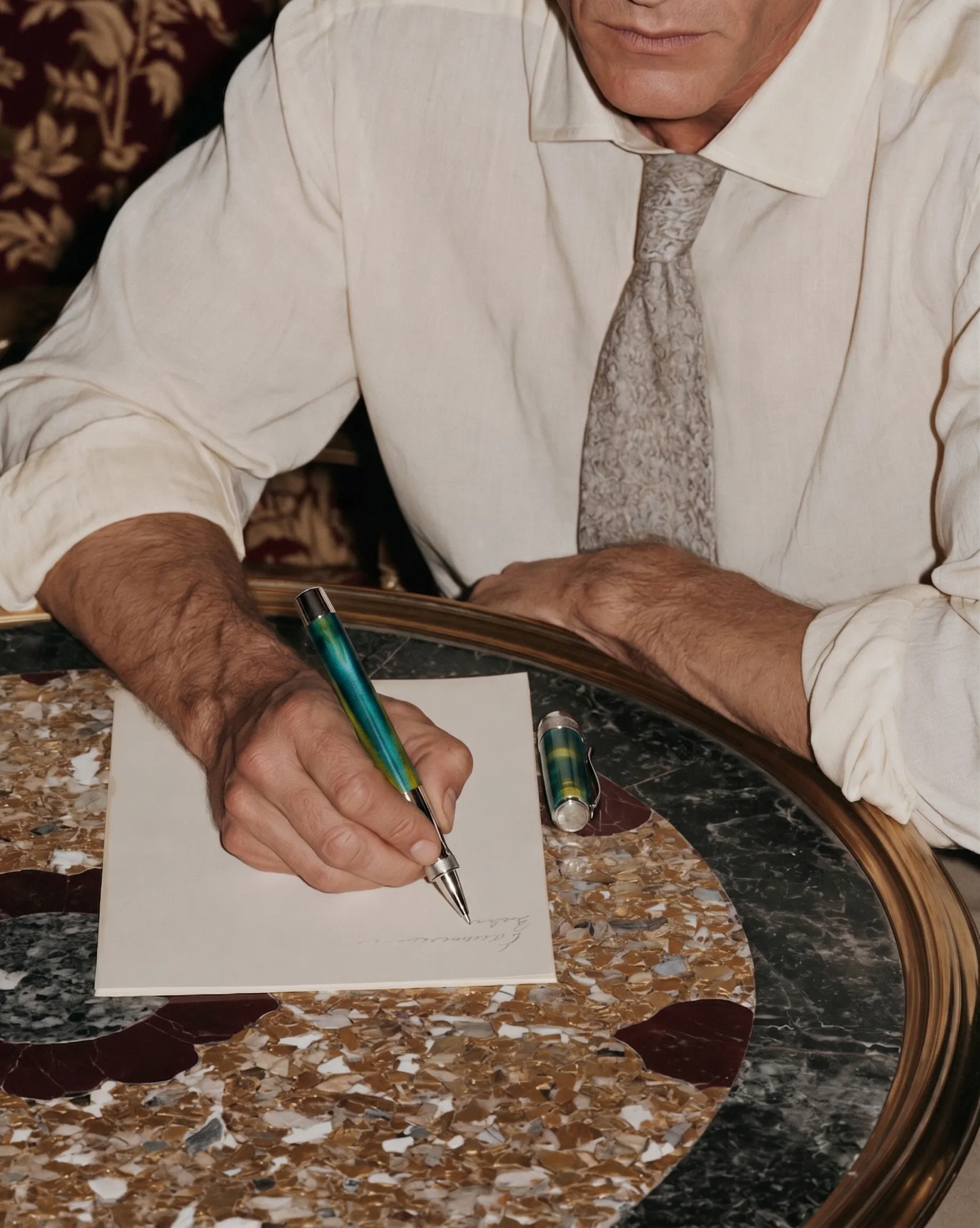
The acid bright green of grass in the June sun, evoking the glass paste backgrounds of Byzantine apses. A vivid, unexpected color that surprises like light filtering through ancient mosaic tesserae.
The warm gold of Tuscan sandstone, the same color that in Florence clads the palaces of Via Maggio and abbey cloisters. Like the gold leaf of Galla Placidia's mosaic backgrounds — eternal, warm, unmistakable.
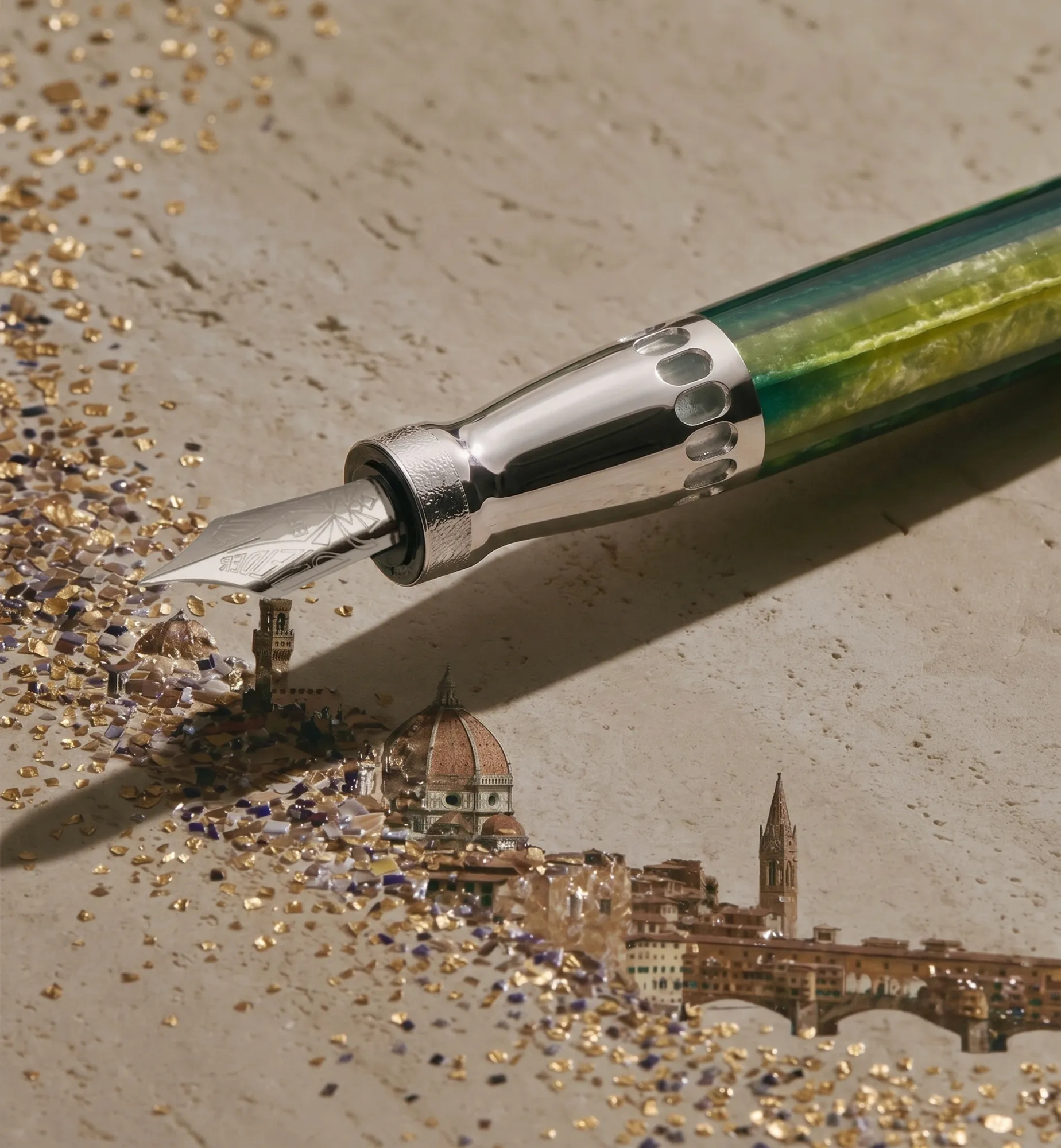
Byzantium · Fountain Pen
The mosaic that writes history
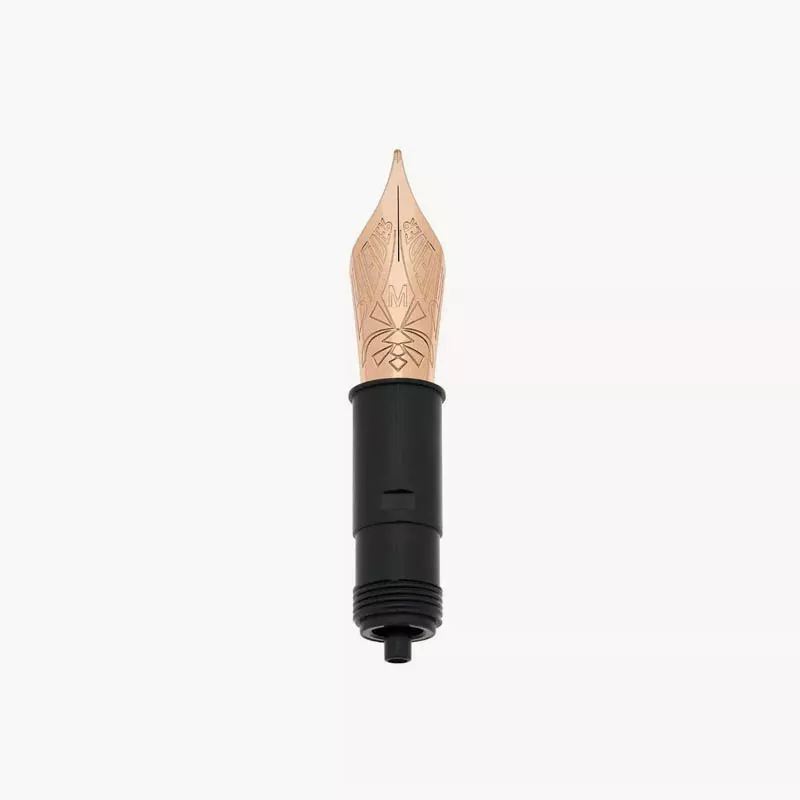
The Byzantium fountain pen features a steel nib, inspired by the historic goose quill — humanity's first writing instrument. Available in three stroke gradations, it adapts to every writer's hand and gesture. The piston filling system ensures full writing autonomy, while the twist magnetic closure ensures precise alignment at every opening.
Collection
Fountain Pen
Edition
Limited188 numbered pieces
Material
Layered resinArtisan mosaic technique
Nib
Steel nibExtra Fine · Fine · Medium
Clip
Steel goose quill
Closure
Twist Magnetic Lock
Filling
Piston Filler
Extra Fine
An extremely fine stroke, ideal for dense writing or a minute, precise hand. Perfect for notes and long texts.
Fine
The most versatile and beloved stroke. Perfect balance between fluidity and control, suited to most hands and paper types.
Medium
A generous, full stroke that enhances ink color. Ideal for those who love expressive, soft writing rich in visual depth.
Byzantium · Roller
The fluidity of mosaic on paper
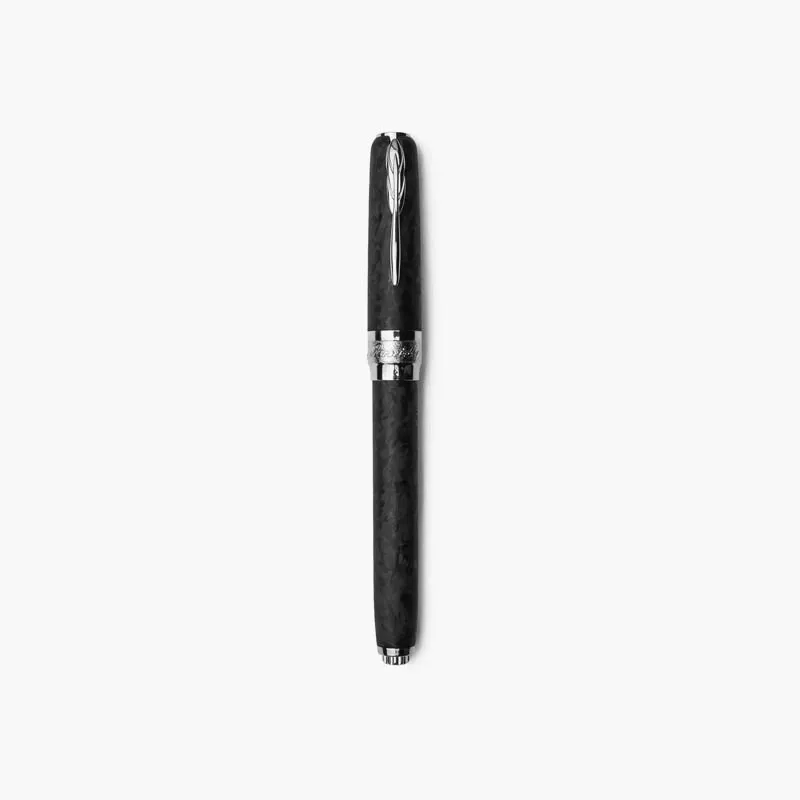
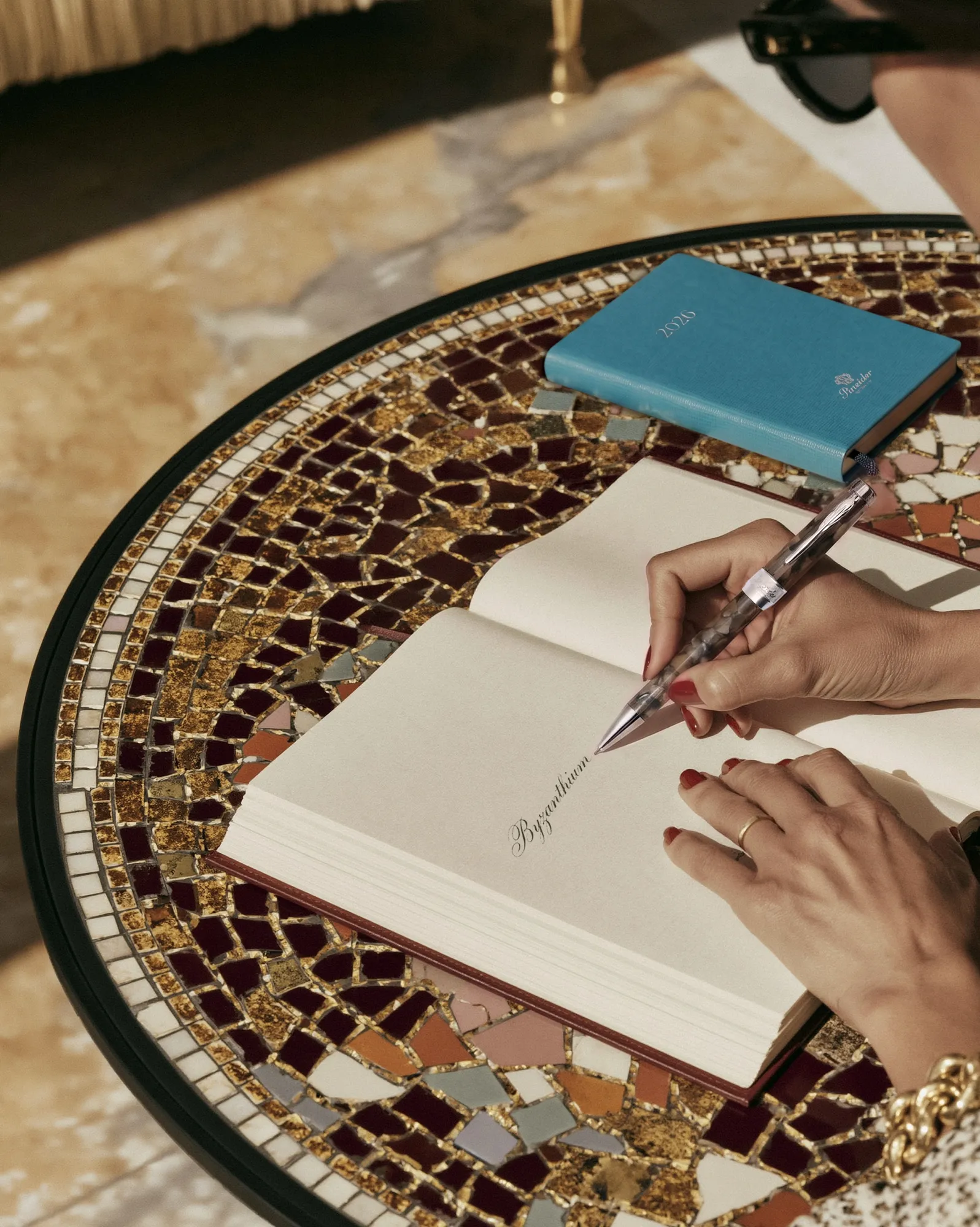
The Byzantium roller brings the same extraordinary body of the fountain pen to everyday writing. The steel tip ensures a smooth, precise stroke, while the twist magnetic closure and goose quill clip complete an object that is as much a tool as a work of art to admire.
Collection
Roller
Edition
Limited188 numbered pieces
Material
Layered resinArtisan mosaic technique
Tip
Steel tip
Clip
Steel goose quill
Closure
Twist Magnetic Lock
Filling
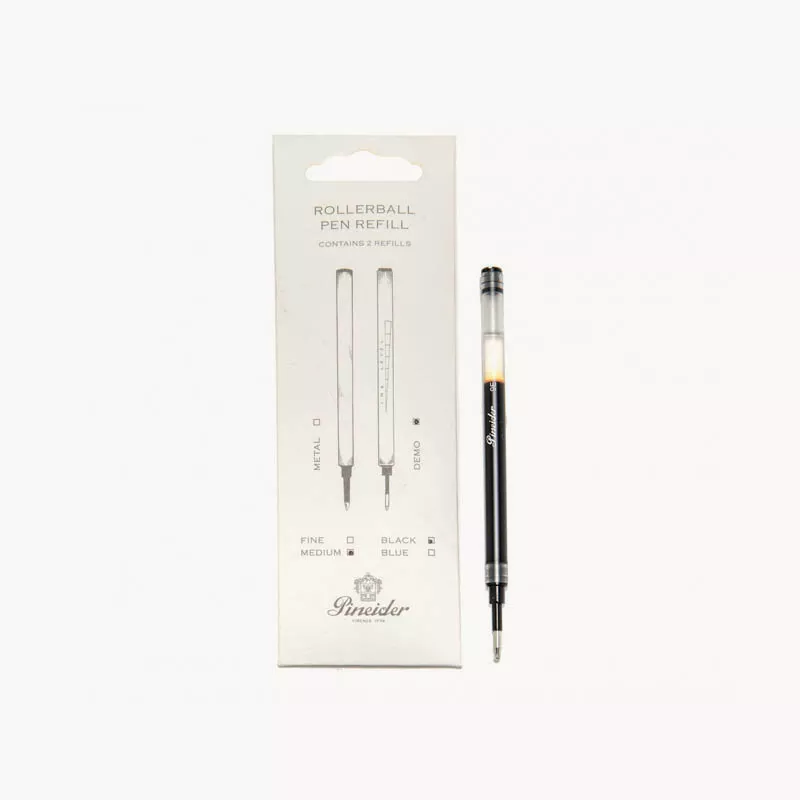
RefillDefault: medium tip, black ink
Byzantium · Ballpoint
Luxury in everyday writing
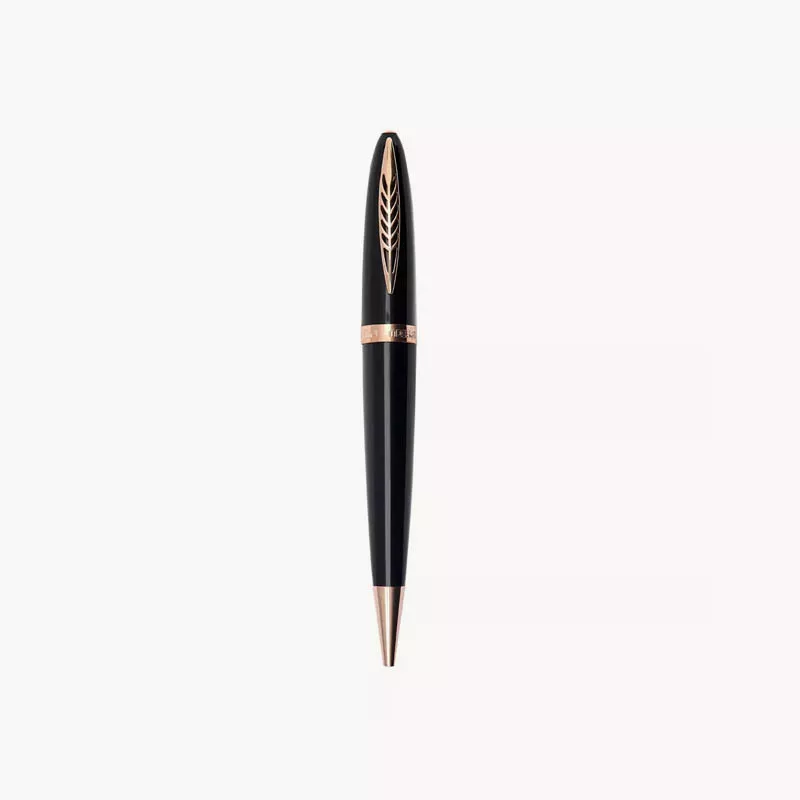
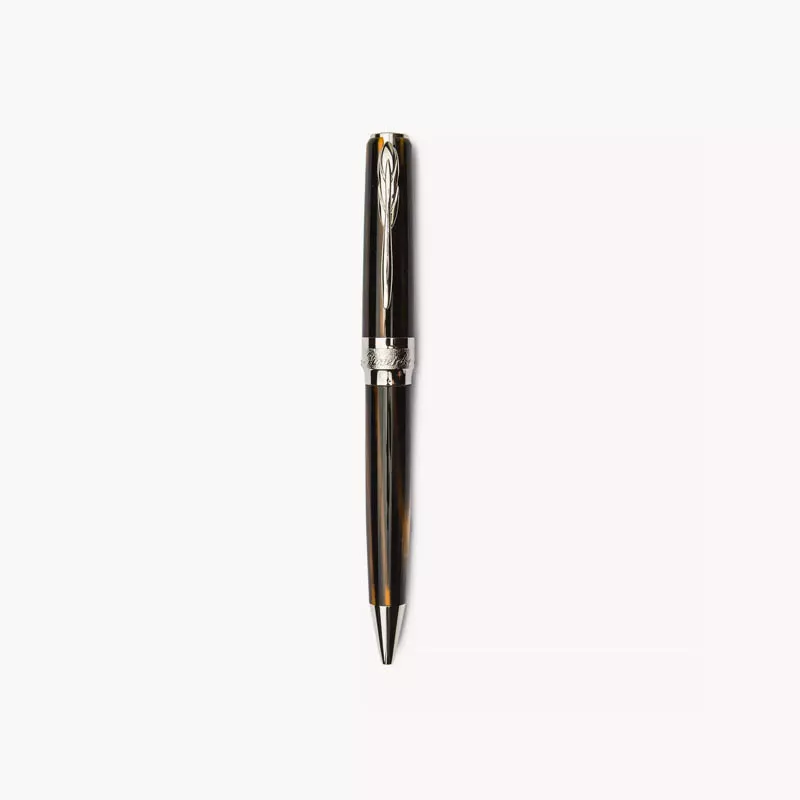
The Byzantium ballpoint brings mosaic art to the most everyday writing gesture. The steel tip and interchangeable refill ensure smooth, lasting writing, while the twist closure offers a refined opening ritual. The layered resin body — each piece unique as every mosaic is — makes it an object to carry every day without ever ceasing to admire it.
Collection
Ballpoint
Edition
Limited188 numbered pieces
Material
Layered resinArtisan mosaic technique
Tip
Steel tip
Clip
Steel goose quill
Closure
Twist closure
Filling
RefillDefault: medium tip, black ink
01
Thin colored resin rods are layered and assembled by hand, one by one, following traditional mosaic technique. The result is an unrepeatable pattern: every pen is unique in the world.
02
The steel nib, inspired by the historic goose quill, is available in Extra Fine, Fine and Medium. Three stroke gradations to suit every hand: from the finest, most precise line to the most generous, ink-rich stroke.
03
Every Byzantium pen is hand-assembled in Florence. The Twist Magnetic Lock closure and Piston Filler are expressions of a technical excellence handed down for 250 years.
The packaging
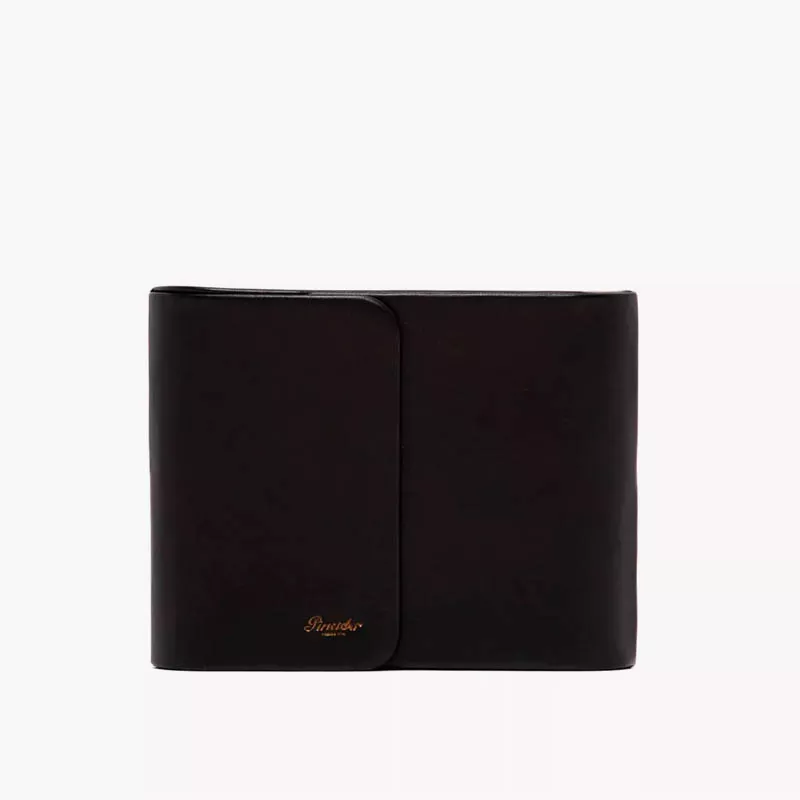
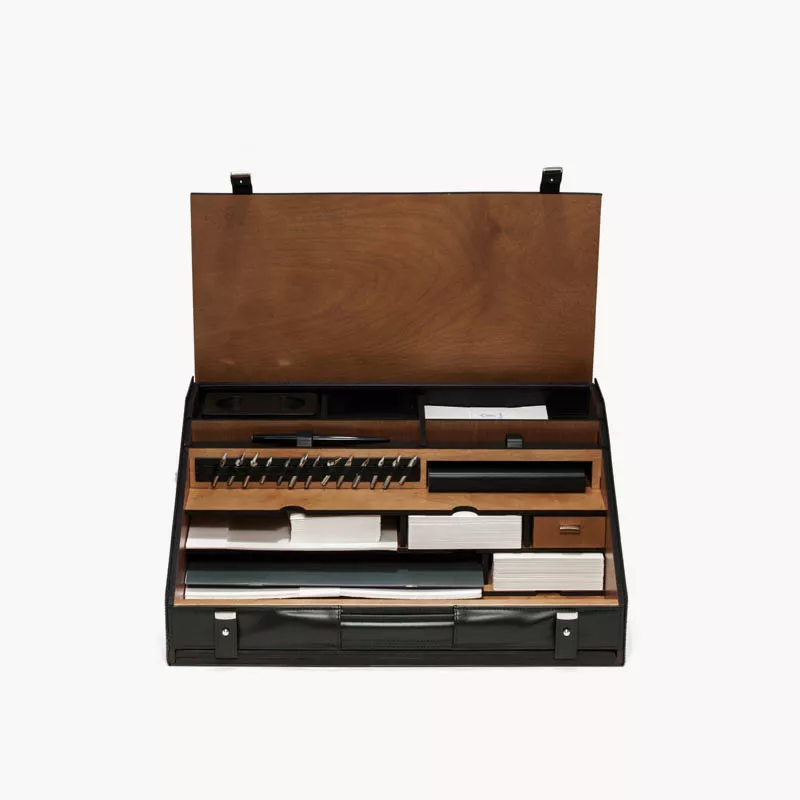
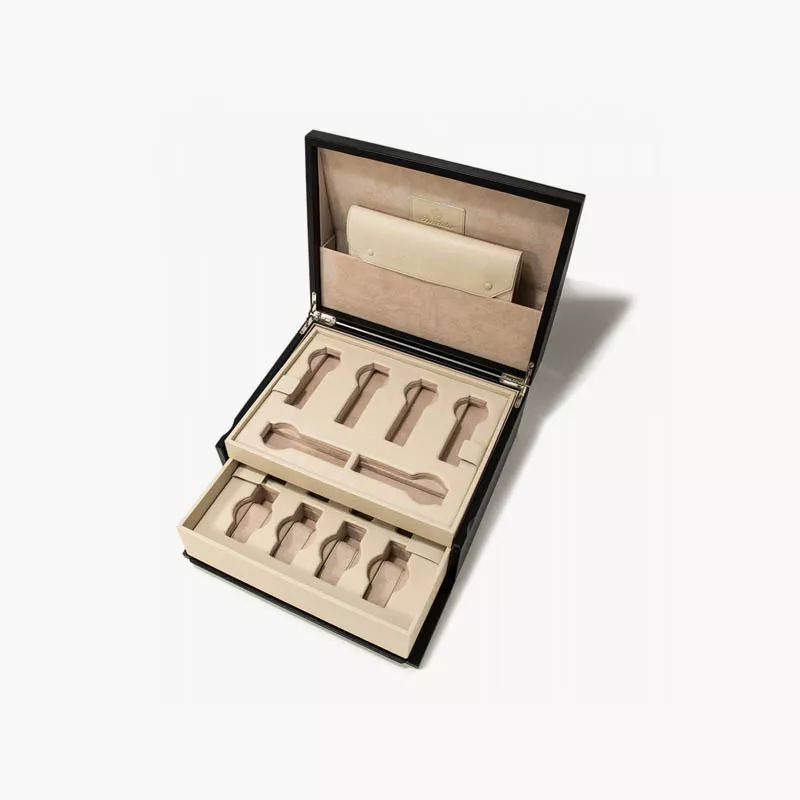
Every Byzantium pen is delivered in the iconic Pineider writing desk — the gift box that has always accompanied the brand's most precious Florentine creations. Packaging designed to be preserved over time, worthy of a numbered limited edition.
Pineider · Arco Collection
188 pieces. Three colors. Three models.
One certainty: no Byzantium pen is ever the same as another.



You will also be able to have preview access to all the news and future promotions from the Pineider world. *The welcome code cannot be combined with other ongoing promotions.